Faux pas, 2011–2012

Tulband (Roze), Turban (pink), 2011
H 60 x W 45 x D 36 cm
Wadding, bandage, foam rubber, lacquer, textile, and epoxy
Photo: Sara Bjarland, Private collection

Tulband (opgerolde trainingsbroek), Turban (rolled up sweatpants), 2011
H 55 x B 45 x D 32 cm
Wadding, bandage, foam rubber, lacquer, textile, and epoxy
Photo: Sara Bjarland

Exhibition view at (former) C3 gallery, 2011

Zegelringen (signet rings) 2011
H 98 x B 123 x D 7 cm
Wood, glass, floor-foam and oil pastel, casein paint and ink on paper.

Diamant (groot), diamond (large), 2011
H 47 x B 53 x D 60 cm
Polyurethane, polystyrene, casein paint, varnish
Photo: Sara Bjarland

Diamant (klein), diamond (small), 2011
H 18 x B 18 x D 28 cm
Polyurethane, polystyrene, varnish
Photo: Sara Bjarland

Flits en ketting (Flash and chain), 2011

Wapenschild (coat of arms), 2011
H 44 x W 27 x D 9 cm
Polystyrene, paper, casein paint
Photo: Sara Bjarland

Wapenschild (coat of arms), 2010
H 120 × W 85 × D 15 cm
Floor-foam, foam rubber, clay, glitter
P.ART of your life, Zwolle

Exhibition view Faux pas, at (former) C3 gallery
Photo: Sara Bjarland

Goudklompjes (Goldnuggets), 2011
Photo: Sara Bjarland

Bla bla bla bla, 2011
Private collection

Vaantje (Award ribbon), 2011
H 62 x W 48 x D 20 cm,
PU foam, textile, polystyrene, foam rubber and epoxy
Photo: Sara Bjarland, private collection
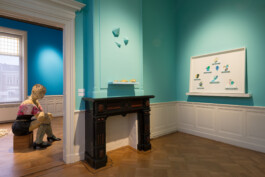
Detail uit pronkkamer (Detail of state room), Museum Jan Cunen, 2012

Goudklompjes (goldnuggets), 2011
H 12 x W 60 x D 20
Floor-foam, cast polyurethane foam, gold leaf
Een faux pas (letterlijk: misstap) is een overtreding van de sociale regels of etiquette door het verkeerd interpreteren van de sociale regels en cultuur of het niet op de hoogte zijn hiervan. Zo geldt het dragen van een ring met een familiewapen dat niet aan de regels voldoet als een faux pas.
Dit was het uitgangspunt voor het nieuwe werk van Maartje Folkeringa. Zegelringen, ambtsketenen, merktassen, diamanten, wapenschilden en tulbanden zijn voorbeelden van ingrediënten waar Folkeringa zich door heeft laten inspireren. Visuele objecten waaraan mensen hun identiteit ontlenen, artefacten met een verhaal en een verleden. Haar (wand) sculpturen en tekeningen, die doen denken aan een verzameling brokstukken uit een fictief rijk, lijken te leven. Ze proberen zich op hun allerbest te etaleren. De schijn die ze willen wekken staat in schril contrast met de kwetsbare materialen waaruit ze bestaan, zoals o.a. polystyreen, piep- en purschuim, papier, tape, stof, verf en vetkrijt. De scheuren in het oppervlak zijn zichtbaar aanwezig, en vertonen een blik achter de maskerade. Imperfectie staat naast perfectie; kleurrijk naast verkleurd; opgepoetst naast stoffig; minutieus naast schets.
Zaaltekst bij tentoonstelling Faux pas, in voormalige C3 gallery, Amsterdam
A faux pas (literally: misstep) is a breach of social rules or etiquette, caused by misinterpreting social norms and culture or by simply not being aware of them. For example, wearing a signet ring with a family crest that does not meet the proper standards is considered a faux pas.
This idea formed the starting point for the new work of Maartje Folkeringa. Signet rings, chains of office, designer bags, diamonds, coats of arms, and turbans are some of the elements that inspired her. Visual objects from which people derive their identity—artefacts with stories and histories. Her (wall) sculptures and drawings, reminiscent of a collection of fragments from a fictional realm, seem to be alive. They try to present themselves in the best possible light. Yet the impression they aim to convey stands in stark contrast to the fragile materials from which they are made, such as polystyrene, foam and expanding foam, paper, tape, fabric, paint, and oil pastels. Cracks in their surfaces are clearly visible, offering a glimpse behind the masquerade. Imperfection sits alongside perfection; colourful beside faded; polished beside dusty; meticulous beside sketch-like.
Exhibition text for Faux Pas at the former C3 Gallery, Amsterdam.